ABDUL EL-SAYED’S SITUATION
WARRANTS SPECIAL ATTENTION
 It’s been observed that when a young man lives by the precepts of traditional Christianity or Judaism, it’s a cause for celebration. A priest, minister or rabbi may be in the offing — or a devoted husband and father, which is just as desirable.
On the other hand, when a young man commits to live by the precepts of Islam, it’s a cause for worry.
Why should this be so?
Because one of the strictest Muslim precepts is jihad, the forceful imposition of Islamic faith, practice and law (Sharia) — as well as the required punishment of those who won’t submit to Islamic domination.
Now, it’s not necessary to repeat once again the oft-repeated point that not all Muslims are jihadists. However, it’s a safe assumption that those Muslims who try to live in an ordinary, peaceful, unaggressive way are nonetheless encouraged (or receive pressure) to support the traditional vision of Islamic supremacy.
At the very least, there’s probably a general expectation within their community that they will sympathize with this goal. Under such conditions, would it be unfair to think of most Muslims as jihad-adjacent?
That’s an uncomfortable thought. I understand why some people would find it offensive. But it’s also unavoidable. And this election forces us to address it.
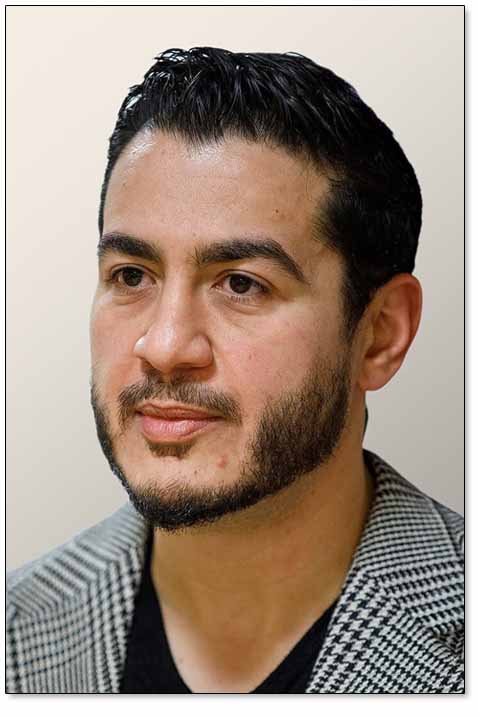 Dr. Abdulrahman Mohamed El-Sayed, the epidemiologist and former public health official running for the U.S. Senate here in Michigan, would be an exemplar of American Muslim professionals living the American life, fulfilling the American dream shared by countless descendants of immigrants.
Born in America, and known casually as Abdul, he exemplifies a long tradition that has seen immigrant offspring achieve success on our shores and become involved in public life. It’s no surprise that his accomplishments would give him prominence in his ethnic circle and draw support for his political ambitions from it.
This has certainly been a pattern in other groups — the Irish, the Italians, and my own Slavic ancestors among them.
But El-Sayed’s situation warrants special attention. It has been plausibly charged that he is a devotee of the Muslim Brotherhood, the parent organization of Hamas, Hezbollah, and numerous other jihadi factions (several Muslim Brotherhood U.S. chapters have been designated as terrorist groups in themselves by the State Department).
His involvement with the Brotherhood is not new.
Back in 2011, during the Brotherhood’s insurgency in Egypt, El-Sayed wrote an article for the Huffington Post titled “Why the U.S. Should Support the Protesters in Egypt” — those protestors having been mobilized and managed by the Brotherhood. The same month he wrote a brief appeal to then-President Barack Obama to back that coup (which was later overthrown), claiming that…
“…millions in Egypt have been demonstrating against the brutality, ruthlessness and injustice of their own regime, one that has terrorized them for nearly 30 years — and is attempting to repress them even today. Those people are counting on you, President Obama…”
During the Brotherhood’s brief time in power, El-Sayed signed a letter calling for a purge of Egyptian media and police — presumably of those who had been against the insurgency and whose loyalty to Brotherhood rule could not be counted on. Several co-signers of that same letter have donated more than $25,000 to his current Senate campaign.
El-Sayed’s father-in-law, Tayeb Jukaku, serves on the founding committee of the Islamic Society of North America, which the federal government has termed “a public facing group for the Muslim Brotherhood.” Jukaku is a top donor to Fighting for Michigan PAC, the primary funding arm of El-Sayed’s campaign.
El-Sayed himself has walked a careful line when questioned about such connections. Asked in interviews and campaign events whether he would disavow ties to the Brotherhood, he typically deflects the question, recasting it in terms of religious freedom. He’s even likened it to the charge faced by John F. Kennedy during his 1960 run for the White House: that JFK intended to submit himself to Vatican rule if he was elected President. El-Sayed has said…
“…[Kennedy’s] answer, famously, was that he was not running to be a Catholic president. He was running to be President and happened to be Catholic. I’m not running to be a Muslim senator, I’m running for U.S. Senate and happen to be Muslim.
“… I’m never going to tell you what faith you can or can’t practice. I want to protect your right to practice your faith as you choose.”
This is a very smooth response — one calculated to convey a comforting, all-American, live-and-let-live attitude to non-Muslims, while not alienating his support base in Dearborn and other Muslim enclaves around Michigan.
But it raises the very discomforting issue of taqiyya. That’s the Islamic doctrine of religious deception — the permission Muslims enjoy to mislead (or even lie) in order to advance the cause of Islam.
In an article I wrote recently for Crisis Magazine I observed that taqiyya is…
“a basic tenet of the faith. To acknowledge it — and hence, to be uncertain about someone’s true sympathies — is not Islamophobia. It’s caution. Consequently the motives and loyalties of even well-meaning, Americanized Muslims are never quite beyond scrutiny.”
This surely applies to the very Americanized Abdul El-Sayed. And suspicions about his loyalties — and his honesty — are strengthened by posts on X (Twitter) from El-Sayed’s half-sister, Eman Abdelhadi, who has alleged that…
…the Muslim Brotherhood had counted the family among its ranks for years and that her mother joined in the group’s activism during the 1970s.
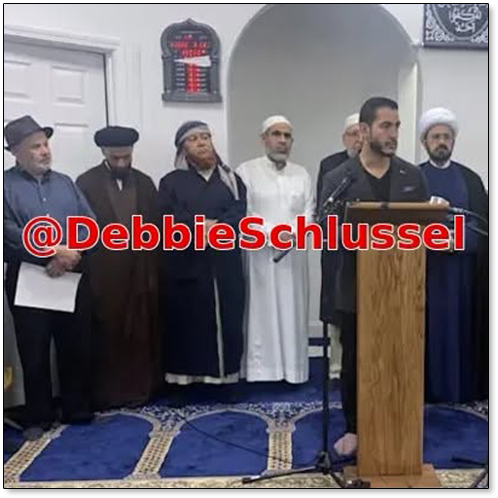 This claim by Abdelhadi (who apparently is estranged from El-Sayed) was given credence by photos also posted on X by Peter Schweizer, president of the Government Accountability Institute and commentator Debbie Schlussel. The images appear to show El-Sayed at a 2022 Muslim Brotherhood retreat in the company of individuals from organizations with credible ties to the Muslim Brotherhood and its affiliates.
One notably candid remark by El-Sayed himself raised questions about his affinities. In an interview with The New York Times he described how he had purchased a $123,000 condominium through an Islamic financing arrangement that avoids an interest-bearing mortgage. This could be dismissed as simple faith adherence except for the explanation he gave of his motive…
“When I die and I stand before God and go through everything I did in my life, I don’t want to say I did it the easy way instead of the Sharia-compliant way.”
It’s not unreasonable to ask how far he would go in his compliance with Sharia as a United States senator.
A win for El-Sayed could very well tip the balance of senatorial power away from the Republicans. Thus, in an appeal to Michigan voters Donald Trump has attacked El-Sayed in his customary bombastic way…
“Mohammed is about making America terrible like it was just two years ago. We were in the Dark Ages. Now we’re in the Golden Age of America. Let’s keep it that way. Don’t vote for Mohammed El-Sayed. He’s not for us, and he hates our country.”
Vice President J.D. Vance was more nuanced — and more persuasive — in his assessment, noting how El-Sayed had been reluctant to definitively condemn last spring’s Hezbollah-inspired attack on the Temple Israel synagogue in Michigan’s West Bloomfield Township…
“This foreign-born jihadist, a literal terrorist, rammed his truck into the temple and opened fire, hoping to kill hundreds of innocent Jewish schoolchildren, our fellow Americans, inside.
“And do you know what Abdul El-Sayed said when confronted with that? He said, and I quote, ‘Hurt people hurt people.’”
How such criticism will effect Michigan voters remains to be seen. Jonathan Tobin, editor of the Jerusalem News Syndicate, has worried that Trump’s remarks, in particular, may strengthen El-Sayed’s support among Democrats…
“…they are not only instinctively disbelieving anything that Trump says. They are also following the lead of most of the liberal media, which has continued, despite evidence to the contrary, to assert that there has been a post-9/11 discriminatory backlash against Muslims. So they are likely to believe the candidate’s assertions that any attempt to accuse him of being linked to [the Muslim Brotherhood] or of being any sort of radical Islamist is, by definition, Islamophobic.”
Abdul El-Sayed is an attractive candidate, no doubt about it. He’s young, good looking, and adept at redirecting awkward questions and deflecting criticism. In that, he actually resembles John F. Kennedy, who could play the press like the proverbial fiddle.
El-Sayed definitely has a support base, and it extends well beyond Michigan’s Muslim enclaves. A neighbor up my street has an El-Sayed sign on her lawn. And believe me, where I live ain’t Dearborn.
Factor in current Trump fatigue, anxiety about high gas prices, and Michigan’s notorious reputation for Democrat election hanky-panky, and there’s no denying the possibility of El-Sayed beating Republican Mike Rogers.
Is this child of Egyptian immigrants, this doctor-turned-politician jihad-adjacent? Ominous clouds hover over Abdul El-Sayed. It’s a situation that certainly warrants special attention.
The results will be seen soon enough.
____________
Here’s a link to Jonathan Tobin’s thoughts about El-Sayed’s Muslim Brotherhood connections distributed by the Jerusalem News Syndicate…

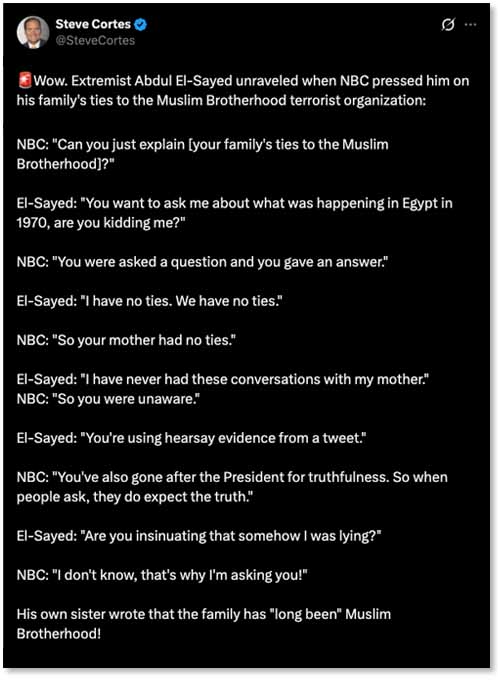
Steve Cortes, president of the League of American Workers, posted a brief transcript of El-Sayed’s exchange with NBC Nightly News anchor Tom Llamas who questioned him about alleged ties to the Muslim Brotherhood. It illustrates El-Sayed evasiveness on the topic…
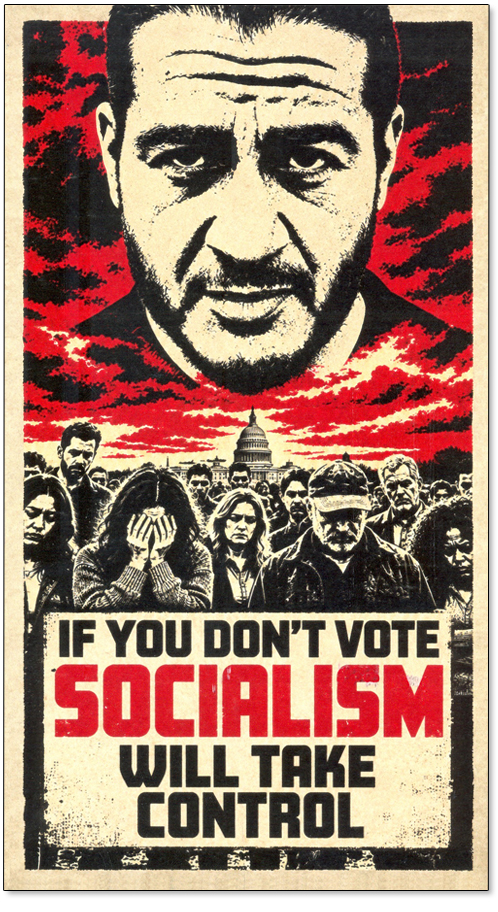
It’s my impression that Republican Senate candidate Mike Rogers, has been reluctant to press too hard on El-Sayed’s Muslim Brotherhood connections — no doubt trying to avoid charges of “Islamophobia.” Instead, he’s focused mainly on his opponent’s Socialist leanings, as demonstrated by this campaign flyer…
Abdul El-Sayed has garnered support from unexpected sources. Canadian Jewish writer and academic Gad Saad (author of the book, “Suicidal Empathy”), whose family fled from Muslim terror in Lebanon, offers his views on the endorsement of Abdul El-Sayed by Jewish actor, Mandy Patinkin…
Leave a Reply